 Go to UK site
 You're currently here
Go to UK site
You're currently here
You're currently here
Go to UK site
You're currently here

|
2026 Matt Christmas came early to Sydney. Update to Version 8 of The Complete Guide to Leadership. |

|
2022 - 13 years later, Broadland Housing Group Facilitators with their 2009 vintage manuals (updated of course) |

|
We always check your bookshelf. Alain passes the test. EquInnoLab, Deurne. |

|
Alex |

|
Ian Richard flew to Canada to make sure Ian had taken his manuals with him |

|
Brigitte |
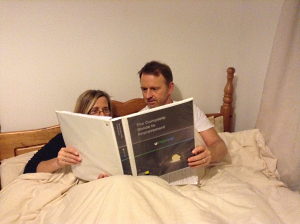
|
Jane and Steve |
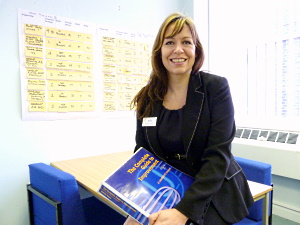
|
Belinda |

|
Neil and Andrea |
The Complete Guide to Leadership
Version
13
Overview
The very first version of this manual was produced for participants of our Universal Leadership Skills course. Later versions added content based on situations raised by the participants and experience we gained from running the course. Recent years have seen us working on an ongoing basis with a number of Executive Teams and their leaders who, despite different environments and circumstances, face similar challenges. This has often resulted in us developing teach-ins for Executive Events. Over time, these have been expanded and refined, and ultimately turned into new content for this manual.
Version 13 sees a major expansion in content with new sections added and all existing sections revised to a greater or lesser extent. Word count isn't a measure of quality but it does illustrate this expansion, from around 48 000 words in Version 12.1 to 70 000 in Version 13.
Below are some of the highlights.
New sections
| • | Leading Recruitment, Succession Planning and Leavers |
| • | Leading Associates and Contractors |
| • | Leading Volunteers |
| • | Tips for Newly Appointed Leaders |
| • | Tips for Chief Executives |
Existing sections restructured
Leading your Boss and your Peers has been split into:
| • | Following your Boss |
| • | Working with your Peers |
Two existing sections - Leading your Team and Leading the Next Tier Down - have been split to highlight two of the most important practices in the manual. These sections are:
| • | Leading your Team |
| • | Leading your Team - Leader Speaks |
| • | Leading the Next Tier Down |
| • | Leading the Next Tier Down - Leadership Forum |
Leadership - Background to the Ideas
We have improved and expanded our interpretation of the work of Mary Parker Follett (pages 2.4-2.5).
Leadership and the Sigmoid Curve
This is one of the most used sections of the manual when working with Executive Teams, not least when carrying out strategy development. The entire section has been expanded. Two particular changes to note:
| • | The leadership practices for Growth have been split into Early Growth and Later Growth (page 3.3) |
| • | Leadership practices for Topped Out (as opposed to Topping Out) have been added (page 3.6) |
| • | Development failure is new (page 3.6) |
Leadership and Motivation
There is new content on team versus individual bonuses (pages 4.4-4.5).
Leading Individuals
Principle 4 - Good people (page 8.3) and Practice 7 - Watch out for and deal with Special Causes (page 8.8) are new.
Leading your Team
The 14 Attributes of an Effective Team have become the 15 Attributes of an Effective Team, the addition being: A sensible name which reflects what the team is there to do (page 9.3).
The content on Developmental Stages has been expanded with a particular emphasis on tips (pages 9.4-9.7).
Practice 8 - Beware blind spots (and similar) is new (page 9.14).
The pros and cons of Personality Profiles is new (page 9.17).
Leading through Others
Principle 2 - People like to know what their boss's boss thinks (page 11.2), Practice 5 - Leader's Leader Speaks (page 11.5) and Practice 9 - Chat to people in the levels below (page 11.7) are new.
Following your boss
There are eight new and four revised practices (section 13). Practice 1 - Follow as you would wish to be followed - nicely summarises the philosophy of this section.
Leading Change
Principles 8, 9 and 10, and Practices 2, 7, 8 and 9 are new (section 15).
Leading Reorganisation
Principles 3, 6, 7, 9 and 10, Practices 9 and 11 are new (section 16).
Tips for Organisational Design
The principles have been updated and expanded (page 17.2).
When to break up a team or department is new (page 17.4).
Tips 9 and 13 are new (page 17.6).
Organisational Design and the Sigmoid Curve is new (page 17.9).
For those who like a bit of history, The Organisation Chart and its origins has been expanded (pages 17.9-17.11).
Leading Recruitment, Succession Planning and Leavers
This is one of the new sections and the contents include:
| • | Thoughts on recruitment |
| • | Recruitment, old style |
| • | Recruitment and the Sigmoid Curve |
| • | Signs you've made a duff appointment |
| • | Practices for succession planning |
| • | Thoughts on leading leavers |
| • | Practices for leading leavers |
| • | The effects of repeat turnover |
Making the Best Use of Staff Survey Results
There is new content on the link to change and reorganisation (page 19.6).
Tips for Being More Strategic
Tips 5 and 11 are new (pages 20.4 and 20.5).
The Corporate Brain
Attributes of an effective Corporate Brain 6 and 10 are new (page 25.3).
The content on Cognitive Tunnelling is new (page 25.4).
Leadership Miscellany
'Be direct' is new (page 29.3).
Full list of sections
| 1. | Introduction to Leadership |
| 2. | Leadership - Background to the Ideas |
| 3. | Leadership and the Sigmoid Curve |
| 4. | Leadership and Motivation |
| 5. | Leadership and the Giants |
| 6. | Functional Leadership |
| 7. | Flexible Leadership |
| 8. | Leading Individuals |
| 9. | Leading your Team |
| 10. | Leading your Team - Leader Speaks |
| 11. | Leading through Others |
| 12. | Leading People in Remote Locations |
| 13. | Following your Boss |
| 14. | Working with your Peers |
| 15. | Leading Change |
| 16. | Leading Reorganisation |
| 17. | Tips for Organisational Design |
| 18. | Leading Recruitment, Succession Planning and Leavers |
| 19. | Making the Best Use of Staff Survey Results |
| 20. | Tips for Being More Strategic |
| 21. | Leading Associates and Contractors |
| 22. | Leading Volunteers |
| 23. | Tips for Newly Appointed Leaders |
| 24. | Directing versus Managing |
| 25. | The Corporate Brain |
| 26. | Leading the Next Tier Down |
| 27. | Leading the Next Tier Down - Leadership Forum |
| 28. | Tips for Chief Executives |
| 29. | Leadership Miscellany |
| 30. | Ongoing Support from the UIC |